
Heaven’s Heartbeat - A Way Through The Wilderness
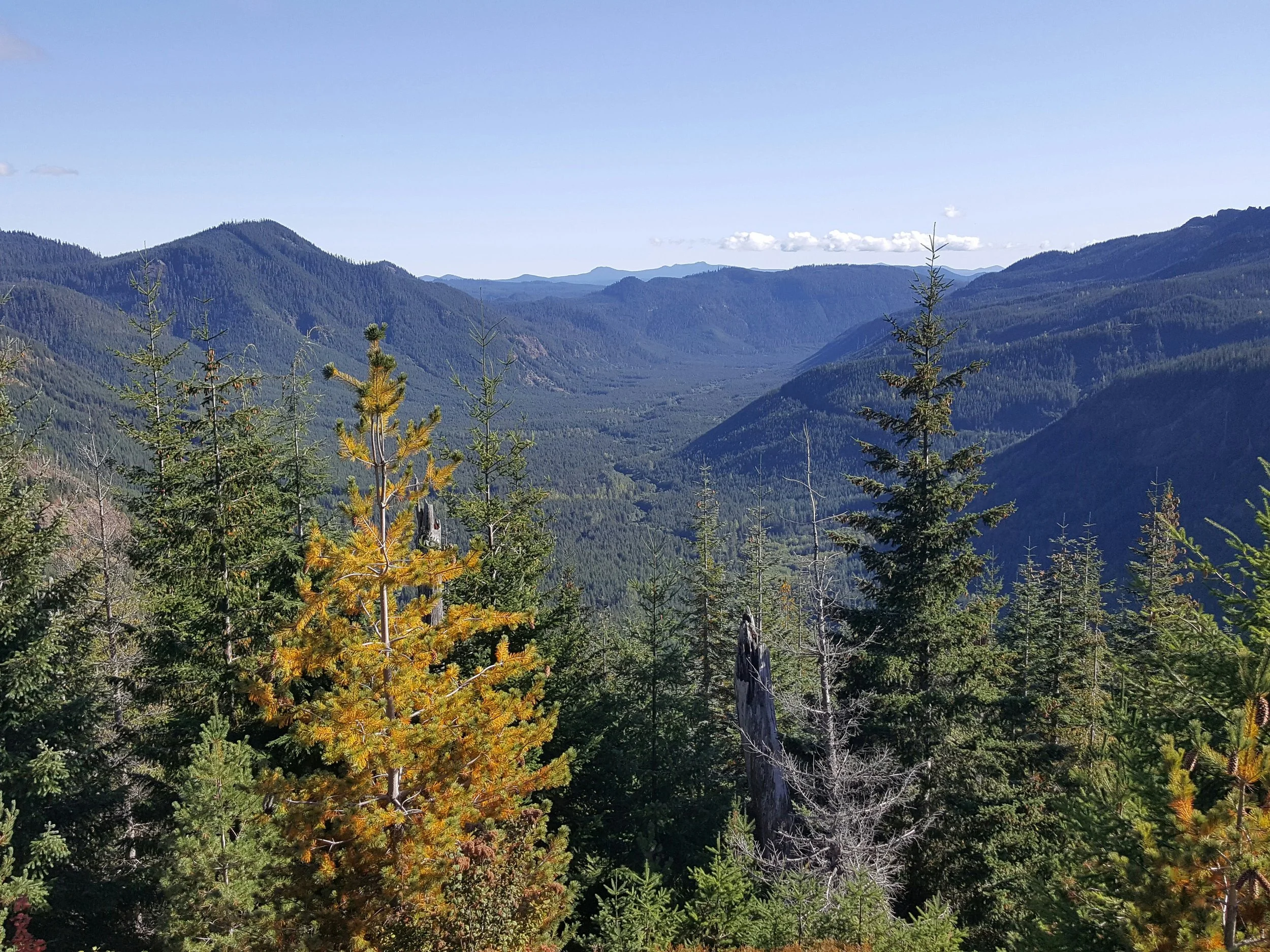
Dawn slipped over the ridgeline far above me, the gray light barely revealing Blue Creek, far below.
Misty shadows rose across the valley as I worked my way up the steep ridge. My son Ryan was somewhere off to my left, perhaps two or three ridges away, clawing his own way up the mountain. I wanted him to experience the kind of adventure I have savored for decades.
The Blue Mountains are rugged and scenic, with deep canyons, rolling hills and dark timbered plateaus spanning about 4,000 square miles—from southeastern Washington, the Blues push deep into northeastern Oregon. For much of my life I have probed and explored its peaks, creek bottoms and ravines.
None of its landscape is easy.
I had slung on my pack before daylight. “We’ll meet toward the top,” I told Ryan. “It’s steep and thick, but we’ll find our way.”
“Okay, Dad. See you at the top.”
Even the initial ascent was unforgiving—tiny game trails winding up from the creek bottom choked with maple, snowberry and bitter brush. As I gained elevation, the terrain turned even wilder. Ridges rose like bony spines, cloaked in dense stands of fir, pine, and larch, releasing a distinct aroma that only the Blue Mountains offer—a sharp, resinous, piney scent that works its way into my soul.
I pushed upward, taking big breaths as my boots searched for footing on loose rock. I was soon to learn that the real challenge was in the draws and ravines that scratched deep into the mountainside.
When I hit the first one, I wondered where Ryan was in his climb and what obstacles he faced.
I worked my way around a ridge into a narrow gully clogged with thick brush. “And how do I get through this?” I muttered. The tangle ahead of me looked impenetrable. But I’d learned something from decades of treks in wild places like this: the closer you get, the more a trail will reveal itself.
To put it another way, you must move into the mystery of the mess to see the path forward.
The morning seemed alive with the chatter and hum of birds and insects. Dropping to my knees, I pushed forward, parting the undergrowth. I was now crawling on my belly, pushing through branches and brush that closed in like a tunnel. Thorns snagged my jacket, roots grabbed my elbows, but inch by inch, I advanced. Sweat beaded on my forehead, mixing with dirt.
Part of me was saying, This is nuts, while something deeper was saying, I love this!
Finally, I pushed through. The big timber on the ridgelines was always clear of the tangle in the ravine, but then came the next gulch, steeper and denser. The mountain maples here were ancient, their gnarled limbs arching down to the ground and reaching up like a sentry’s arms to prevent forward motion. There was no standing up in that place. “Belly crawl time,” I said to myself, flattening against the earth.
The sun was up now, and bright, striking small empty places in the draw, creating a wonder of light shades and shadows. I wriggled forward, arms pulling, legs pushing.
Three feet in, the world narrowed to underbrush and shadows. My heart pounded from the effort, muscles burning. Suddenly, there was a crash and a rustle ahead, and it wasn’t the wind. It was something heavy. And it was breathing. I froze.
Bursting through the tangle, a black bear’s head emerged. Its muzzle was wet, eyes beady and dark, locking onto mine not five feet in front of me. The bear's ears perked in surprise. So did mine. Time stopped, but my mind raced. What will the bear do? What will I do? Then, I yelled—a primal, guttural roar born of shock. The bear woofed back, a deep, rumbling growl and I couldn’t tell who was louder.
In the blink of an eye, the bear recoiled, snapping branches as it retreated, vanishing into the green maze. (Had it seen an angel over my shoulder?)
I lay there for a moment, heart thundering, drenched in sweat, adrenaline surging. And then I laughed. “Mr. Bear,” I gasped, “I am glad you didn’t feel welcome. That was—intense.” Catching my breath, the mountain air tasted good in that moment of relief, crisp and cleansing.
I kept moving forward, slowly finding my way. It was rough going, but a way always opened.
Finally emerging out of the ravine and onto the ridge, I started looking for my son.
When I reached Ryan, I told him the story. We laughed, thanked God, and then we rested. Although my legs were aching, the bear had ignited something—a raw reminder of creation’s unpredictability. I thought of my lifetime in these wilds: canyons that seemed bottomless, peaks that mocked climbers.
Even when it looks impossible, there’s always a way through. At first glance, it looks like sheer chaos. An impermeable barrier. But up close, a path opens—even if it means yelling at bears and crawling on your belly.
As we worked our way back down toward Blue Creek, I pondered my experience. In some ways, I thought, this reminds me of life. Tangled obstacles that intimidate from a distance. Jobs lost, relationships strained, health issues rising up out of nowhere, dreams deferred. But inching forward, persevering, we find a way through.
I recalled my own trials. Like having to return from Japan much sooner than I envisioned. Times were difficult for everyone, and the mission support for my family dropped like a rock. We returned home, scraping by with no money and no immediate means of assistance, not knowing how we would get by. Those days felt like belly-crawling through briars. But the Holy Spirit helped us and persistence paid off.
We kept moving forward.
History brims with such examples: explorers like Lewis and Clark forging through unmapped wilderness, finding passes where none seemed possible. Inventors like Edison, failing thousands of times before the light bulb lit. They kept pushing forward.
Charles Dickens endured childhood poverty and pushed through factory work to write classics like A Christmas Carol.
The Bible echoes this truth repeatedly. In Isaiah 43:19, God promises, “See, I am doing a new thing! Now it springs up; do you not perceive it? I am making a way in the wilderness and streams in the wasteland.”
I am thinking of Job who belly-crawled through the dense thicket of suffering, loss, and trials, yet remained faithful to God. Or Joseph, who stared in the face of betrayal by his own brothers. Sold as a slave and falsely imprisoned, he eventually rose to power in Egypt. Through perseverance, humility and forgiveness, he heard God’s voice and saved a nation.\
Paul had it made in his world, or so he thought. When his eyes were opened and he followed Jesus, he pushed through mind-numbing thickets of opposition. He was beaten, stoned, slandered and shipwrecked. He was forced to languish in prison and chains when he longed to be spreading the Gospel across the Roman world. Yet he pushed forward with resilience that echoes like the clap of thunder over the centuries.
Always pressing on.
These stories aren’t just ancient tales; they’re God’s grace-delivered blueprints for endurance, maps of encouragement when there seems to be no way out, no way forward, and no way through.
On our return journey to the car, Ryan led us into another draw—less choked, but still demanding. Dropping low and pushing forward, we emerged triumphant.
The incident with the bear became a hinge moment in my life. Every time I bring it to mind, it reminds me that God always makes a way if we are willing to push forward.
Mountains yield and walls part to those who advance in Christ. No need for grand heroics; sometimes, a belly crawl suffices. In the tangled chaos of reality, perseverance cuts the path.
And as the Bible shouts, even in the wildest places, a way emerges because God will make a way.
