Heaven’s Heartbeat - He’s Alive!
What can I say about the fragrant air of an early morning in Jerusalem—except that it’s a one-of-a-kind experience. You simply never forget it. The air of a new day carries a layered, almost sacred stillness before the city fully wakes.
The resinous, woody aroma of Jerusalem pines bursts forth as sun-warmed air touches their needles. This mixes with the faint, earthy but-ever-present smell of ancient limestone. There is also a sharpness of wild oregano and rosemary, growing everywhere on the hillsides.
And then the fragrance I really treasure: the aroma of baking bread and fresh-roasted coffee threading its way through the city.
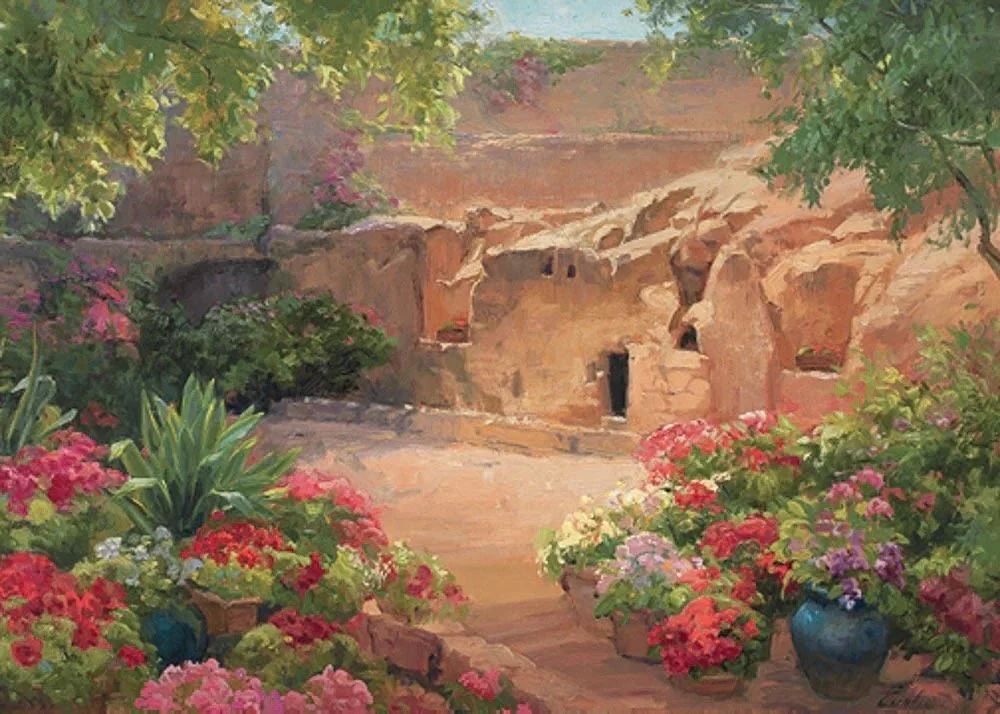
All of my senses were in overload as I walked through the Damascus Gate along the stone path leading to the Garden Tomb. Early commuters moved through the commotion of busy traffic and honking horns. The mixture of ancient and modern pulled at my soul as I moved toward a rocky, ominous outcrop known as Skull Hill, overlooking a bus lot.
Of the dozens of times I’ve visited Garden Tomb, it always feels like a spiritual oasis. Tranquil, serene, and deeply reverent—it’s a place where time seems to slow, allowing visitors to meditate on eternity. Only God knows, but many believe this rock-hewn tomb along the ridge of Mount Moriah, with its garden setting, aligns closely with the Gospel descriptions of Jesus’ burial and resurrection.
A short line had formed in front of the massive wooden gates—weather-worn, heavy with history—standing closed, guarding the quiet enclosure. Ahead of me waited two German women, dressed modestly, their faces full of silent expectation. After a patient wait, one grew restless and rapped firmly on the old wood, hoping perhaps a caretaker would hear and open the gates sooner.
A friend once told me that “You don’t need to speak out everything you think!” But in that precise moment, the words rose unbidden from deep within me, like a memory etched into my spirit through decades of Scripture meditation. I spoke gently but with clear conviction in English: “He is not here. He has risen!”
The women turned, surprise flashing briefly across their features before melting into warm, knowing smiles. No translation was needed; the declaration transcended barriers of language, culture, and time. In that brief, sacred exchange, the explosive truth of Easter resonated afresh—not as a faded legend or abstract doctrine, but as vibrant, living reality pulsing through the present.
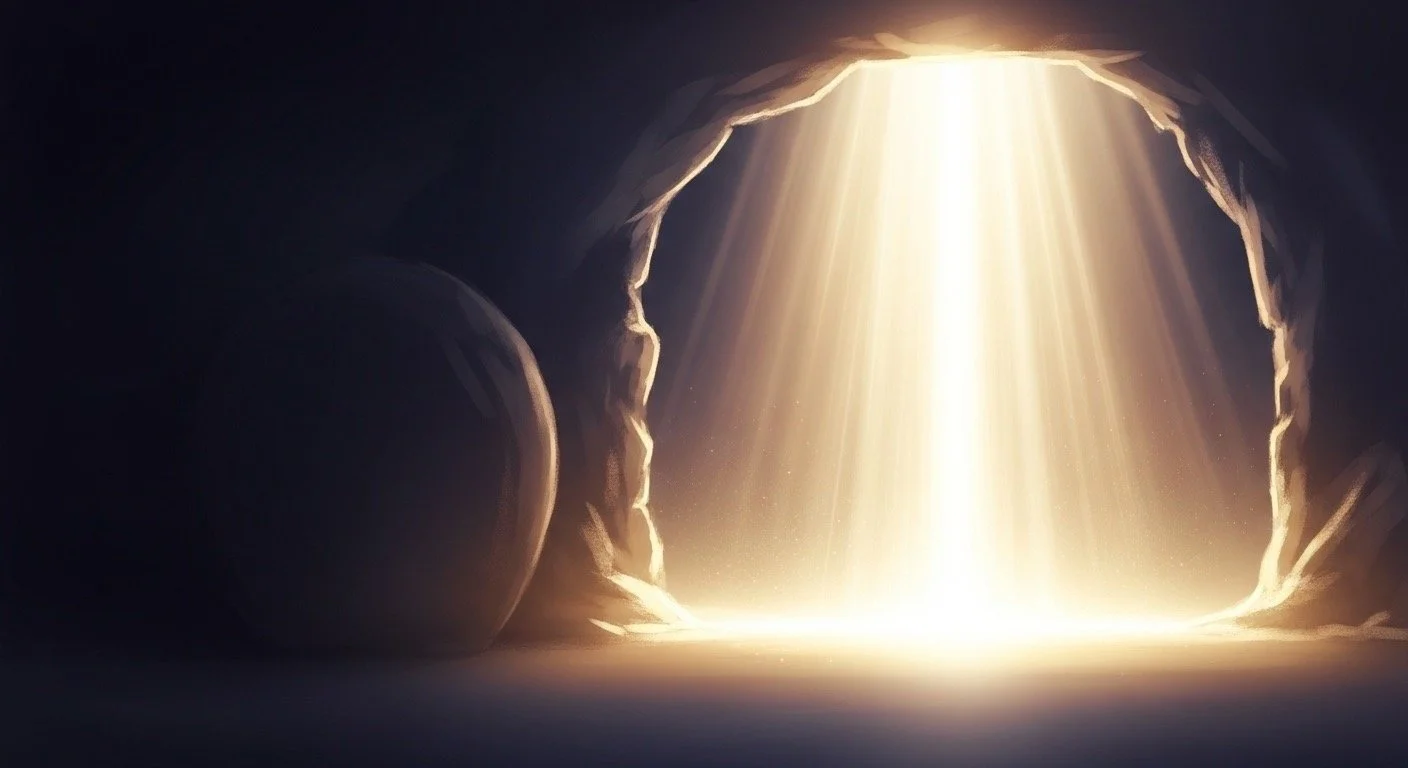
This encounter captures the heart of the resurrection: far more than a historical footnote or seasonal tradition, it stands as the pivotal, transformative declaration that reorients all of existence. Matthew 28:1-10 paints the scene with vivid drama: The women approaching the tomb at dawn, the violent earthquake, an angel descending in dazzling light to roll away the immense stone, and the announcement, thundering yet compassionate:
“He is not here; he has risen, just as he said. Come and see the place where he lay.”
Fear and overwhelming joy intertwined as they ran to tell the disciples—only to meet the risen Jesus Himself on the path. He greeted them with heaven’s words that changed everything for humankind: “Greetings... Do not be afraid.”
Yet tragically, in our contemporary world, this cornerstone truth faces understated yet persistent erosion from multiple directions. Recent surveys underscore growing skepticism, even within self-identified Christian communities. Lifeway Research consistently shows that about two-thirds of American adults (around 65-66 percent in recent years) affirm the biblical accounts of Jesus’ physical, bodily resurrection as completely accurate and historically true. However, others—roughly 20-25 percent—disagree outright, with another group unsure.
Efforts to make the gospel more user-friendly sometimes inadvertently dilute its edge. The intent—reaching the unchurched—is understandable, yet it raises questions about whether softening language risks obscuring the very miracle at Christianity’s center. Our public sphere—all the way to past White Houses—have made symbolic cultural gestures that dismiss or even intentionally challenge our Christian faith.
These trends arise from complex, physical and spiritual pressures:
the human flesh’s inclination toward comfort and moral ease over costly conviction;
cultural pushes for “tolerance” that sideline the truth of scripture, and
unseen spiritual forces actively working day-in and day-out to undermine the miraculous foundation of the faith in the human soul.
When the resurrection is minimized, rationalized as mere metaphor, or dismissed through human reason, Jesus at best is condensed to an admirable moral teacher or ethical philosopher. His divine power to transform a human life with resurrection power devolves into social platform fodder and ridicule.
This stands in stark contrast to Lee Strobel’s transformative journey. An award-winning investigative journalist and legal editor at the Chicago Tribune (and a committed atheist), Strobel confronted his wife’s Christian conversion with personal and professional skepticism. He launched a rigorous, evidence-based investigation into the resurrection—examining the medical certainty of Jesus’ crucifixion death (affirmed even by secular experts), the historical reliability of the empty tomb, the radical transformation of eyewitnesses like James and Paul, the disciples’ martyrdom for their testimony, and the implausibility of alternatives like swoon theory, mass hallucination, or body theft.
Finally, the cumulative weight of evidence overwhelmed him. The intellectual dominoes finally fell: if Jesus rose as the Son of God, His teachings demand ultimate allegiance. Atheism gave way to faith; Strobel embraced Christ and authored The Case for Christ, an enduring bestseller that has led countless seekers to similar conclusions.
The apostle Paul stakes the absolute claim of the Christian faith on this event in 1 Corinthians 15: without the resurrection, preaching is vain, faith futile, sins remain unforgiven, believers who died are lost, and Christians become the most pitiable people—clinging desperately to a hoax.
But Christ has risen—discarding grave linens, appearing alive to over 500 witnesses, conquering death once and for all. Hope truly does transcend the grave; earthly blessings become previews of eternal glory. We can worship boldly, endure trials with assurance, and face every uncertainty knowing death’s sting is removed.
This resurrection reality calls for unflinching courage in 2026.
Like the angel at the tomb and the risen Savior Himself, we proclaim: “Do not be afraid.” We echo the triumphant strains of Don Francisco’s classic anthem He’s Alive: “The gates and doors were barred and all the windows fastened down... I found the stone was rolled away... He’s alive!”—the barrier shattered, the Savior victorious, every shadow of fear dissolving into peace because death could not contain Him.
Today, stand at your own personal “tomb gates”—those places of lingering doubt, mounting cultural pressure, spiritual opposition, profound grief, or personal failure—and declare the resurrection unflinchingly. It is neither myth nor optional metaphor; it is the flashpoint and hinge of history, the anchor of hope, the defeat of death and the beating heart of reality itself.
Run with joy, live with boldness, and proclaim it to the world: He is risen indeed!